In this article
- How Does Positioning Affect the Lower Back?
- Why Are the Knees and Hips Sometimes Supported?
- How Does the Pelvic Position Influence Back Decompression?
- Why Might the Table Angle Change?
- Can Positioning Affect Numbness or Leg Symptoms?
- Why Is Patient Comfort Closely Monitored?
- Does the Same Position Work at Every Session?
- How Is the Position Selected?
- What Should Patients Expect in Carmichael, CA?
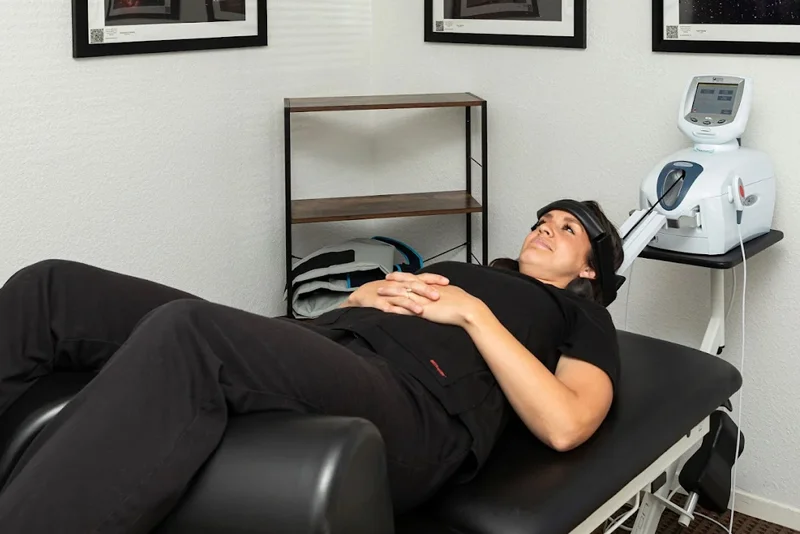
Body positioning is important during lumbar decompression because it influences where traction is directed, how comfortably the patient is supported, and how the lower spine responds during treatment. Small changes in the hips, knees, pelvis, or table angle can alter the way decompression force is distributed.
Lumbar decompression is not simply a matter of lying on a treatment table while a fixed amount of force is applied. A decompression chiropractor may adjust positioning based on the patient’s symptoms, mobility, comfort, health history, and response to earlier sessions.
How Does Positioning Affect the Lower Back?
The lumbar spine is made up of several vertebrae, discs, joints, muscles, and supporting tissues. Their relationship changes slightly depending on whether a person is lying flat, bending the knees, elevating the legs, or changing the angle of the pelvis.
During lower back decompression, positioning may be used to direct traction toward a particular part of the lumbar region. The provider may adjust the table, harness, leg support, or pelvic position to create a controlled treatment setup.
These adjustments are intended to improve treatment accuracy and comfort. The same position may not be suitable for every patient because symptom patterns and physical limitations vary.
Why Are the Knees and Hips Sometimes Supported?
Supporting the knees and hips can change tension across the lower back. Some patients may feel more relaxed with their knees slightly bent, while others may need a different setup to prevent muscle guarding or discomfort.
When the legs are supported, the lower-back muscles may be able to relax more comfortably. This can help the patient remain still during the session and reduce unnecessary tension around the treatment area.
The position may also be adjusted for people who have difficulty lying flat because of hip stiffness, tight muscles, or lower-back discomfort. Comfort does not guarantee a particular outcome, but it can make the session easier to tolerate and help the provider apply traction in a controlled way.
How Does the Pelvic Position Influence Back Decompression?
The pelvis forms the base of the lumbar spine. Changes in pelvic angle can influence the curve of the lower back and how tension is distributed through the spinal area.
During back decompression, a provider may use straps or supports to keep the pelvis stable. Proper stabilization helps prevent the body from sliding and allows the equipment to apply traction more consistently.
If the pelvis rotates, shifts, or remains poorly supported, the treatment may feel uneven. The patient may also tighten surrounding muscles in response. For this reason, the setup is usually checked before the decompression cycle begins.
Why Might the Table Angle Change?
Some spinal decompression systems allow the treatment table or lower section of the table to be angled. Adjusting the angle may influence which part of the lumbar spine receives greater attention.
A patient with symptoms concentrated in one area may require a different position than someone whose discomfort is located elsewhere. The provider may also change the angle when the original setup causes discomfort or does not produce the intended treatment response.
These decisions are generally based on the examination, symptom location, treatment plan, and patient feedback. The table should not be repositioned simply to increase intensity.
Can Positioning Affect Numbness or Leg Symptoms?
Lower-back conditions may sometimes be associated with symptoms that extend into the buttock, hip, or leg. These may include pain, tingling, numbness, or a burning sensation.
Patients should report any change in these symptoms during spinal decompression therapy. A symptom that moves, intensifies, or appears in a new area may signal that the position or settings need to be reviewed.
The provider may stop the session, reduce the force, reposition the patient, or conduct another assessment. New or worsening leg weakness should be discussed promptly rather than ignored.
Sudden weakness, loss of bladder or bowel control, numbness around the groin, or severe symptoms after a major injury require urgent medical evaluation.
Why Is Patient Comfort Closely Monitored?
Lumbar decompression should involve controlled traction rather than uncontrolled pulling or severe discomfort. Patients may notice a stretching or pulling sensation, but they should communicate if they feel pain, pressure, muscle cramping, or increased nerve-related symptoms.
Comfort can change throughout a session. A position that initially feels acceptable may become uncomfortable after several treatment cycles. Providers may therefore ask for feedback before, during, and after treatment.
Useful information includes:
- Where pressure or pulling is felt
- Whether the position feels balanced
- Whether symptoms move into the leg
- Whether muscles begin to tighten
- Whether the straps feel uncomfortable
- Whether the patient can remain relaxed
Clear communication helps guide appropriate adjustments.
Does the Same Position Work at Every Session?
Not always. A patient’s mobility, symptoms, sensitivity, and muscle tension may change between appointments.
Recent exercise, prolonged sitting, travel, work demands, illness, or a new strain may affect how the lower back feels. A position that worked well during one session may need to be modified at the next visit.
This does not necessarily indicate that the treatment plan is failing. It may reflect normal changes in the patient’s condition or the need for a different setup based on current findings.
A decompression chiropractor may review symptom location, daily function, activity tolerance, and the response to the previous session before choosing the next position.
How Is the Position Selected?
The position used during treatment should be based on more than patient preference alone. The provider may consider:
- The area of the lumbar spine being addressed
- The location and type of symptoms
- Whether symptoms extend into the leg
- The patient’s ability to lie comfortably
- Hip and knee mobility
- Previous treatment responses
- Current physical findings
- Relevant health history
Positioning is only one part of the treatment plan. The provider may also adjust traction force, session length, treatment cycles, and support placement.
What Should Patients Expect in Carmichael, CA?
People considering lumbar decompression in Carmichael, CA, should expect the setup to be reviewed rather than assumed. They should be asked about current symptoms, recent changes, comfort, and their response to previous care.
Baratta Holistic Center provides information about Lower Back Decompression for people exploring nonsurgical care options. They encourage patients to report changes in pain, mobility, numbness, tingling, and daily function so treatment can be reassessed when needed.
Body positioning matters because it helps control where traction is directed and how the patient is supported. Careful positioning, clear communication, and regular reassessment allow spinal decompression therapy to be adapted to the patient’s current condition.