
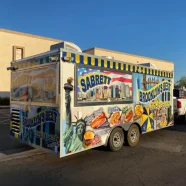


Designing Consistency: Creating a Uniform Look Across Mixed Vehicle Types
For businesses with a mixed fleet of vehicles—vans, trucks, sedans, or SUVs—maintaining a consistent brand image across all assets is a unique challenge. Whether your fleet is used for deliveries, field services, or mobile marketing, having a cohesive appearance is key to reinforcing brand identity. That’s where commercial fleet wraps play a critical role.
If you’ve been searching for vehicle wraps near me, or you’re exploring how to manage fleet branding effectively, understanding how to create a unified look across different vehicle types can help strengthen recognition and credibility for your business.
Why Brand Consistency Matters for Commercial Fleets
In a saturated market, businesses are competing not just on services and pricing but also on visibility and professionalism. When your vehicles share a cohesive, recognizable appearance, they act as moving billboards that reinforce your message every time they’re on the road or parked at a job site.
Key Benefits of Brand Consistency:
- Enhances trust and familiarity with customers
- Supports long-term brand recall and recognition
- Projects a professional and reliable image
- Helps distinguish your business from competitors
Inconsistent graphics or mismatched designs can dilute your brand and give the impression of disorganization, even if your service is top-tier.
The Challenge of Mixed Vehicle Types
Most service-based companies don’t operate fleets made up of identical vehicles. You might have box trucks for deliveries, cargo vans for installations, and small sedans for administrative transport. While this diversity meets operational needs, it presents a design obstacle.
Common Issues Include:
- Varying panel sizes and shapes
- Different door configurations
- Unique branding space limitations on compact vehicles
- Design scaling that may distort elements when resized
Creating a wrap that looks great on a box truck might not translate directly to a smaller van or sedan without careful planning.
This is where working with a trusted vehicle wrap provider becomes essential—especially one experienced in designing flexible branding across vehicle formats.
Designing a Flexible Brand Template
To overcome these challenges, the first step is building a design system or visual template that allows for adaptability. This ensures that, regardless of the vehicle size or shape, core branding elements remain prominent and visually aligned.
Elements to Standardize:
- Logo Placement: Maintain consistency in positioning (e.g., front door or upper side panel)
- Typography: Use the same font, sizing hierarchy, and spacing across all designs
- Color Palette: Stick with your official brand colors to prevent visual disconnect
- Slogan or Tagline: Ensure it’s included in a clear and legible way on every vehicle
- Call-to-Action: Website, phone number, or social media handles should appear in similar locations
By establishing these core design rules, you create a uniform visual language that adapts to each vehicle’s structure.
Scalable Graphics and Modular Design Techniques
One effective method for handling mixed vehicle wraps is using scalable or modular design elements. This means breaking your design into sections—like logo zones, pattern zones, and text zones—that can be adjusted independently based on the vehicle’s dimensions.
For example:
- On a box truck, you might feature a large-scale logo across the side with a full list of services
- On a compact SUV, the same logo can be placed on the back window with a simplified tagline and QR code
This modular approach allows you to maintain brand identity without forcing a one-size-fits-all design onto incompatible surfaces.
Incorporating Brand Hierarchy Strategically
Visual hierarchy refers to how information is arranged in order of importance. When designing wraps for mixed fleets, emphasizing certain brand elements helps customers recognize your business, even when vehicle shapes differ.
Prioritize the Following:
- Business Name or Logo
- Primary Contact Information (website, phone)
- Core Services or Slogan
- Secondary Graphics or Patterns
Keeping this hierarchy consistent ensures that even if secondary elements shift due to space constraints, the most important parts of your brand remain front and center.
Testing Designs Before Production
Mockups and digital proofs are a vital part of designing for a mixed fleet. Before wrapping your entire lineup, test how your graphics look on each vehicle model using digital renderings or scaled prototypes.
This testing phase helps catch issues such as:
- Text running into panel seams
- Graphics covering necessary windows or lights
- Color shifts in different lighting conditions
- Font size being too small to read from a distance
A well-planned pre-production process ensures your investment in commercial fleet wraps delivers a cohesive and polished result across all vehicles.
Final Thoughts: Unified Design, Greater Brand Impact
In a place like Arizona, where fleet vehicles are on the road year-round, consistent branding is more than an aesthetic choice—it’s a marketing strategy. A unified look across all vehicle types reinforces your brand identity, improves local recognition, and adds credibility wherever your vehicles go.
Whether you’re a home service provider, logistics company, or food distributor, the ability to present a seamless visual experience across your mixed fleet can make your brand more memorable and impactful. For businesses actively seeking vehicle wraps near me, partnering with experienced professionals is key to ensuring that design scalability and brand consistency are built into every wrap.
Recent Comments